
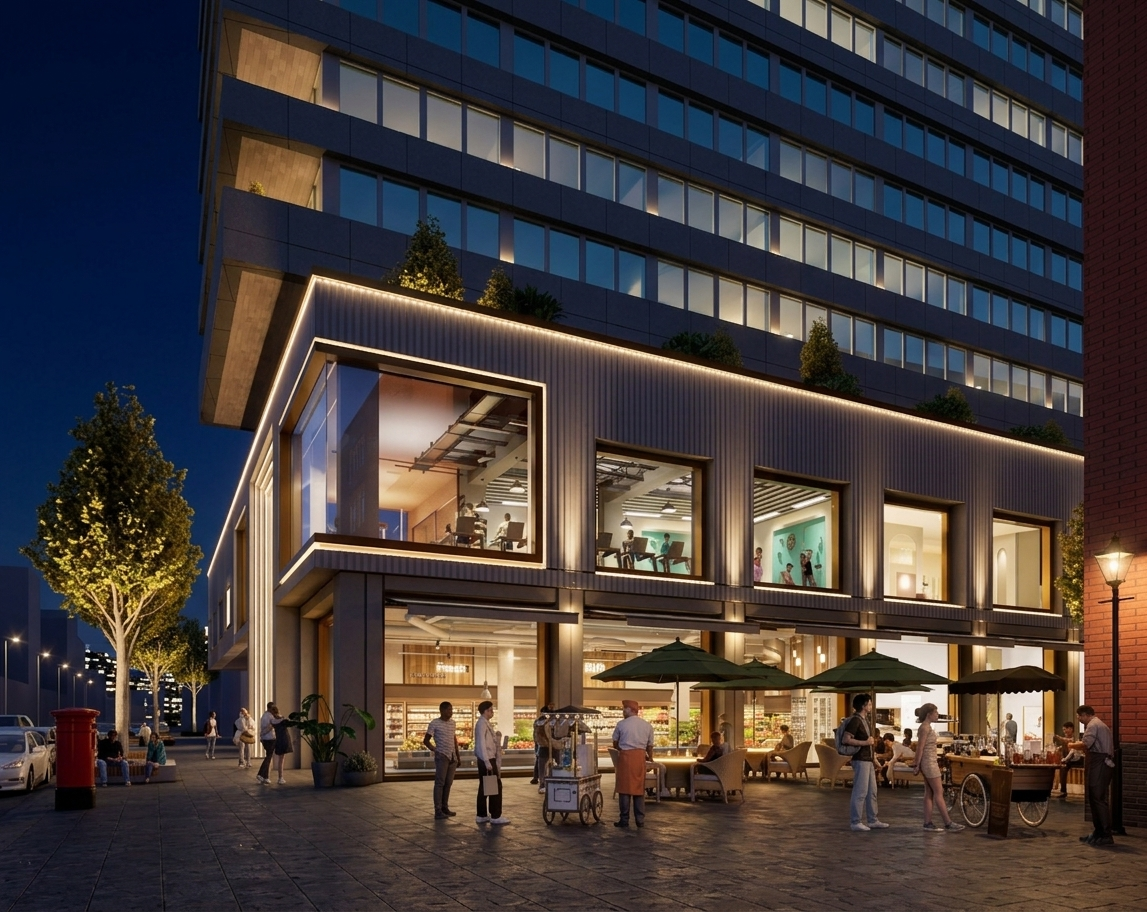
THE CULTURAL INCUBATOR
For decades, commercial real estate has been optimised for efficiency.
Office buildings became machines for work. Retail centres became machines for consumption. Residential buildings became machines for living.
In the pursuit of optimisation, we stripped out almost everything else.
The problem is that cities do not thrive because they are efficient. They thrive because they are productive. Not economically productive alone, but culturally productive.
Culture is not created in theatres. Innovation is not created in offices. Community is not created in cafés.
These things emerge when different people, disciplines and activities collide.
Yet most contemporary buildings are designed to prevent precisely those collisions from happening.
The most valuable buildings of the future will not be those that perform a single function exceptionally well. They will be those that create unexpected overlap between functions. A workplace that hosts exhibitions. A cultural venue that supports start-ups. A restaurant that doubles as a lecture hall. A rooftop that becomes public infrastructure.
In other words, buildings that act less like containers and more like incubators.
This represents a fundamental shift in how we think about value. Traditionally, commercial property has generated income by leasing space. Increasingly, the opportunity lies in curating experiences, communities and networks that cannot be replicated elsewhere.
The irony is that many of the buildings best suited to this future already exist. Across our towns and cities sit robust commercial structures with generous floorplates, central locations and long-term adaptability. Their problem is not obsolescence. It is imagination.
The challenge for architects is therefore no longer simply to design better buildings. It is to create the conditions for culture to emerge.
Because the most resilient buildings are rarely those with the most efficient plans.
They are the ones that make things happen.